National peace and progress will be achieved only through harmonious combination of youths’ enthusiasm and adults’ experience
Nay Pyi Taw January 13
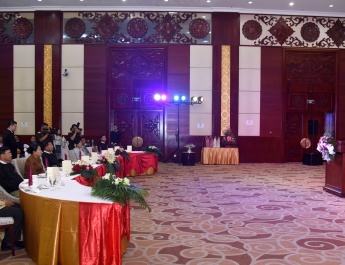
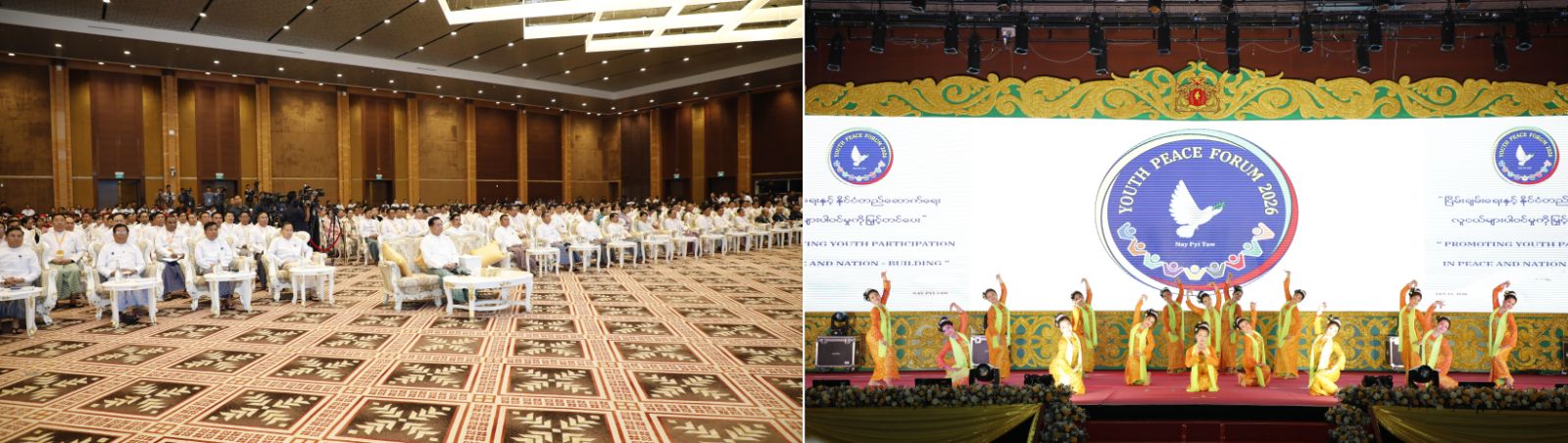
The opening ceremony of Youth Peace Forum 2026 took place at MICC-1 here this morning, with an opening address by Acting President of the Republic of the Union of Myanmar, Chairman of State Security and Peace Commission, Chairman of National Solidarity and Peacemaking Central Committee Senior General Min Aung Hlaing.
Also present were SSPC Vice Chairman Vice-Senior General Soe Win, SSPC member Prime Minister U Nyo Saw, SSPC Secretary General Ye Win Oo, union level dignities, union ministers, NSPCC members, the Nay Pyi Taw Council chair, senior military officers from the Office of the Commander-in-Chief, deputy ministers, ministers responsible for social affairs of Regions and States, peace negotiators, intellectuals and intelligentsia, diplomats, departmental officials, representatives from organizations and associations, experts from various fields, youth representatives of Regions and States, youth representatives from ethnic culture and inter-faith, university students and observers.
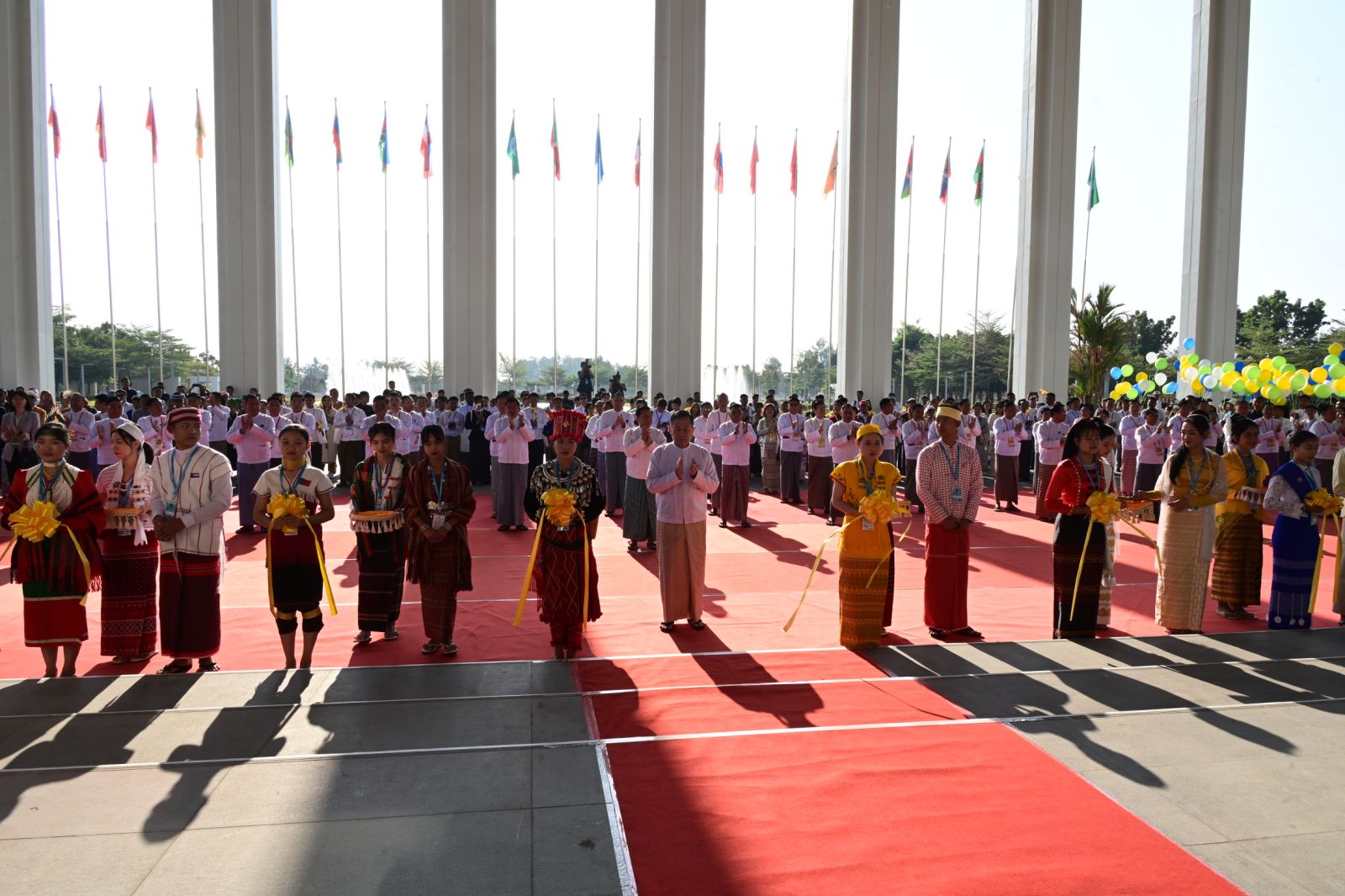
First the Senior General and party were warmly welcomed by ethnic youths.
The Vice-Senior General and eight ethnic youths formally opened the ceremony by cutting a ribbon.
The Senior General inaugurated the ceremony by pushing a button and hanging a prayer letter on the Peace Tree.
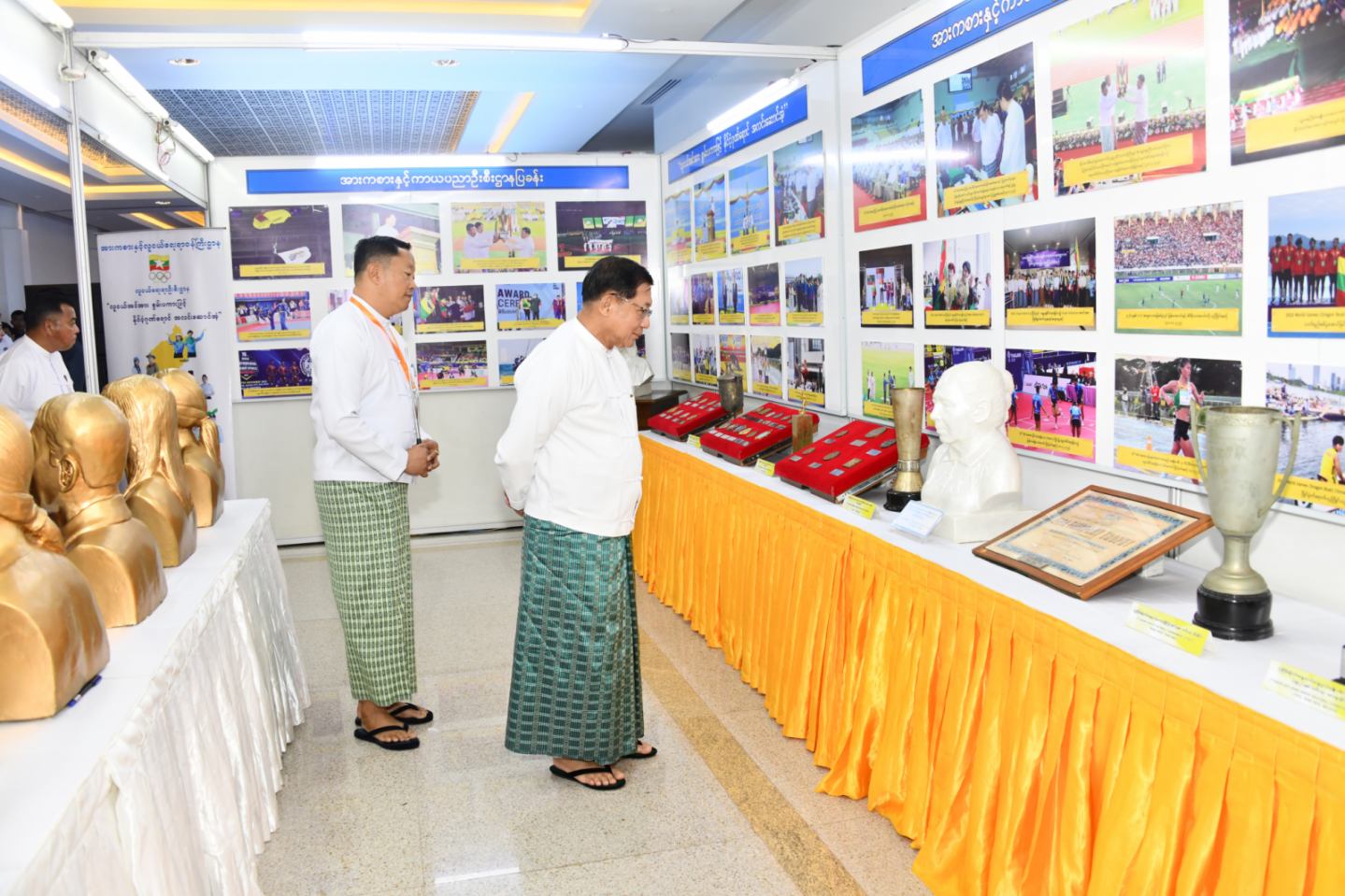
The Senior General and party posed for documentary photos with ethnic youths attending the forum. Then the Senior General and attendees looked around the exhibition held in commemoration of the Youth Peace Forum 2026.
At the second part of the ceremony, the master of ceremonies announced the opening of the
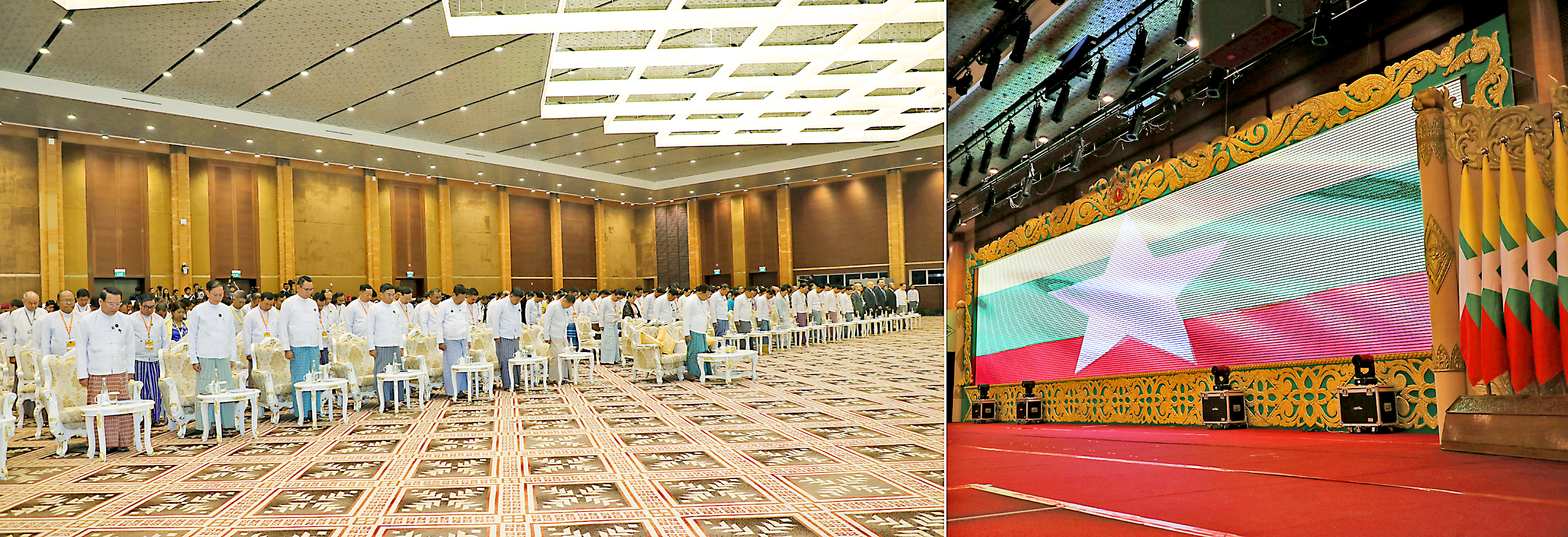
Youth Peace Forum 2026, which was performed with LED animation. Then the audience paid respects to the State Flag.
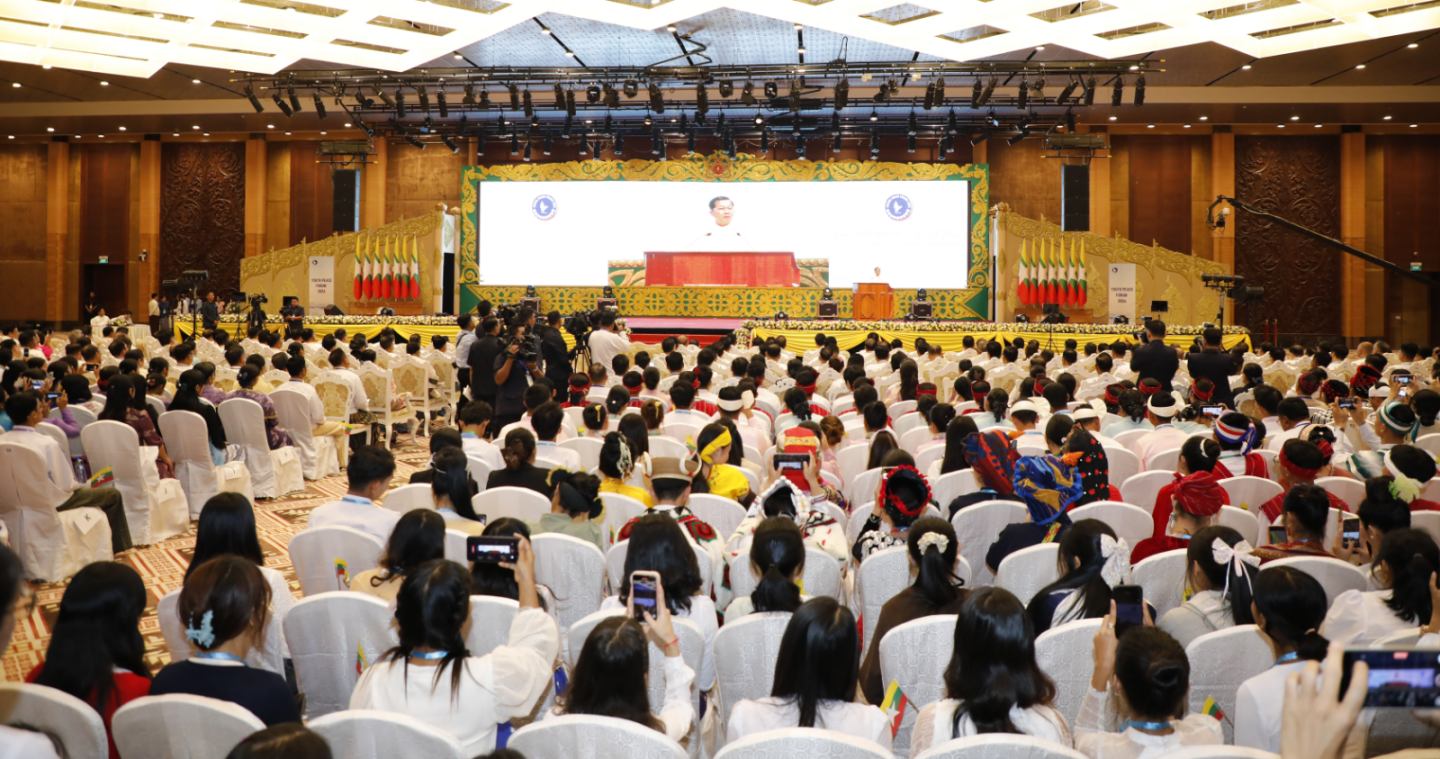
Afterwards, a video clip on “Promote youth participation in peace making and nation building process” was screened.
In his keynote address, the Senior General said today’s youths are invaluable human resources for national development. Youths are also the main force of the country as they are the persons who will carry on the responsibilities of the future State. The nation and the society can be improved more alongside the rise in qualifications, performance and morale and rational thinking power of youths. Moreover, the peace process will gain extra force through talks and exchange of views conducted through the proper knowledge on the requirements and attitudes of youths.
Over 130 different national races are residing in Myanmar and one third or 33 percent of its population is youths between ages 15 and 35. In this regard, the correct vision, belief, emotional intelligence and conviction of youths are the main requirements of the nation as they are the vital force for achieving perpetual peace.
As youths play an important role in the future State, “Promote youth participation in peace-making and nation building process” is the theme of the Youth Peace Forum 2026.
The country fell under colonialists’ occupation, and independence could be restored with the united force of the entire nationalities only after making lots of sacrifices. Although Myanmar became a sovereign and independent country, the pace of development was slow and was caught in a cycle of hard-ships, which must be noted and kept as a lesson. It is obvious in the eyes of all that internal and external destructive forces are trying to break up unity and destabilize the country by app-lying multiple means.
Because of the gross vote rigging at the 2020 election, the Tatmadaw has to restore the national political duties in accord with the law. Concealing the truth, the groups, NUG and CRPH, pushed youths towards armed terrorism, giving false hopes and indoctrinating them into wrongly believing that Tatmadaw is dragging democracy backwards. Everybody accepts that the multi-party democracy general election held on 28 December and 11 January is free and fair, and it is a proof that the country is advancing steadfastly on the path to multi-party democracy.
The armed struggle line on the wrong path has triggered a lot of losses in human resources for the democratic union and infrastructure that was in the initial stage of progress. It is a lesson for all that no result has ever come out in solving the problem through the armed struggle line for over 70 years, and the moment has arrived to see the truth that armed struggle line is the actual cause that is really driving democracy backward. The State is always extending an olive branch and will continue to do so for the armed groups including PDF to return to the legal fold in consideration of the interest of the Union if they have the same goal of establishing a Union based on federalism.
A review of efforts to promote peace and reduce and resolve conflicts in the country shows that there have been important achievements. In particular, the signing of the Nationwide Ceasefire Agreement (NCA) between the Government and ethnic armed organizations remains significant to this day for stability, national unity, and the advancement of the peace process. The NCA made it possible to pursue a political, rather than military, solution to internal conflicts. Owing to the NCA, meetings and political dialogues were initiated, and it can also be said that it helped strengthen trust and cooperation between stakeholders within the country and ethnic armed organizations.
However, by turning a blind eye to the truth and showing insufficient political will to address the root causes of the conflict, while prioritizing only organizational and self-interests, the NCA process failed to advance as far as it should have. Therefore, it is important that the NCA agreements already reached are not merely accepted and left at the level of agreements, but is effectively implemented and put into practice.
For the building of a Union based on democracy and a federal system, it is necessary to jointly cooperate in implementing nation-building processes, including constitutional amendment. In order to realize these objectives, the National Solidarity and Peace making Negotiation Committee (NSPNC) is continuing its efforts, based on the NCA, to strengthen and further promote the peace achievements already attained, with the aim of building durable and sustainable peace.
Peace can only be achieved through meetings, dialogue, and the search for solutions. Therefore, in carrying out peace efforts, rather than merely stating what one wishes to happen, it is necessary to discuss what ought to happen and to work together in unity on what is achievable. Differences should be set aside temporarily while dialogue continues, and areas of common ground should be jointly implemented. Only by building practical, successful, and lasting peace will it be possible to promote national development and advance the well-being of the people, which we wish to clearly convey.
It is widely recognized that, as a consequence of armed conflicts, weaknesses have emerged in the education, health, and economic sectors. Therefore, it is necessary to continue making sustained efforts to achieve durable peace throughout the entire country.
For national development to take place, armed conflict must be brought to an end and political problems must be resolved through political means. However, under the current circumstances, armed conflicts continue to escalate, and as a result, peace processes are unable to move forward and are facing only obstacles. Therefore, in order for the peace process to advance, it is necessary to promote a peace process that includes the participation of the people. To make this possible, we would like to urge the peace-minded youth who have attended today’s event to work together with unity and determination and make concerted efforts toward this goal.
When assuming State responsibilities, it is necessary to implement the national objective of “national prosperity and food security”. Given the country’s economic conditions, the micro, small, and medium enterprise (MSME) sector based on agriculture and livestock serves as an important foundation capable of producing a wide range of outputs, and it is therefore being actively promo-ted to advance socio-economic development. Through such support, it will be possible to effectively prioritize the provision of suitable and decent employment for every working-age youth in the country, as well as the development and nurturing of skilled labour.
In addition, for peace and development, efforts are being made to ensure that the younger generation enjoys full opportunities and that a system is established in which they can develop freely and securely, with comprehensive initiatives in place to promote all-round youth development. The State will continue to implement programmes that support the systematic development of youth across various sectors. Further-more, plans are being carried out to nurture well-rounded youth endowed with the five strengths; as education development is crucial to socio-economic progress, physical fitness and health are equally important. Accordingly, the State is placing strong emphasis on building a healthy and physically fit society. A healthy population will lead to a healthy nation. In particular, everyone wishes to call upon ethnic communities to work together with the State to foster physical fitness and sportsmanship among young people.
In order to achieve a strong and resilient economy, a sound education system is an essential and indispensable sector. From an early age, young people must be nurtured through both education and participation in sports so that they grow into healthy and capable citizens endowed with the five strengths physical, intellectual, moral, economic, and social. To this end, the State is making investments across multiple sectors for the benefit of youth.
As the saying goes, “a good beginning ensures a good outcome,” it is necessary to systematically nurture young people starting from basic education schools. The education sector serves as the fundamental force that develops an individual’s character, intellect, innate spirit, and values; accordingly, it can shape not only the progress of each person’s life but also the future of a nation as a whole.
Students and young people must be nurtured through education to become good citizens with strong morals, a sense of responsibility, and genuine patriotism. They should be guided to develop into well-rounded, knowledgeable, and skilled youth who can be relied upon by the State. It is necessary to train and cultivate the new generation of students and young people to foster love for the country and their ethnic heritage, as well as to in still good beliefs and principles, so that they can lead and shape the nation’s future. Since the youth will create the future of the country, producing disciplined, well-educated, and highly skilled young people is effectively building the nation’s future. No matter how advanced physical infrastructure or technology becomes, if the mindset and character of its users are poor, negative consequences may arise. Therefore, efforts must be made to ensure that today’s youth develop strong, positive mindsets, and everyone should join together to nurture and cultivate them.
He stated that in the peace sector, which is currently the most vital requirement for the nation, will only fulfill our responsibilities if youth themselves participate and cooperate to leave a legacy of peace for future generations. He emphasized that today’s youth must draw lessons from history, choose the correct path, and contribute to the welfare of the world. Furthermore, he urged them to express their perspectives and work together in implementation, fueled by a strong sense of patriotism and the Union Spirit. He added that since peace and stability concern every resident of the country, it is a collective responsibility that requires everyone’s active participation and cooperation. He further stated his gratitude in seeing today’s youth actively engaging in national affairs during this period.
He concluded by urging all ethnic youth throughout the nation to utilize their collective strength and personally participate in building a sustain-able and lasting peace for the country. He called upon them to dutifully fulfill their historical responsibilities and strive together to build a beautiful and prosperous future for the nation.
In his supplementary remarks, the Senior General defined the term “youth” as individuals aged between 15 and 35 years. He categorized those aged 15 to 25 as being in their formative educational years, while those aged 25 to 35 are generally considered young adults who have entered the workforce and are establishing their livelihoods using their acquired knowledge. He noted that the high voter turnout among youth in the first and second phases of the election, held on December 28 and the 11 of this month, is a positive sign for the country. Further-more, he emphasized the need to elevate the role of youth in the future and ensure their active participation in the peace process.
He stated that education is categorized into basic and higher levels. He noted that if vocational subjects are integrated into the basic education curriculum, students will be able to transition smoothly into vocational careers immediately upon completing their basic schooling. He further emphasized the necessity of implementing educational reforms. Currently, the middle school level is being elevated by designating the KG+9 level as compulsory education. Consequently, he shared that plans are underway to not only provide vocational training at the high school level but also to introduce basic foundational knowledge in industrial technology, agriculture, and livestock breeding at the middle school level. He stated that efforts are being made to incorporate agriculture, livestock breeding, and industrial technology subjects into the high school levels of KG+10, KG+11, and KG+12. He added that students who have a keen interest in these fields will have the opportunity to pursue further studies.
Also, he stated that plans are being made to introduce vocational subjects in the up-coming academic year to pro-vide opportunities and new perspectives for youth who do not pass the high school level (Matriculation) examination. These students will be able to pursue vocational training based on their personal interests, while still maintaining the option to choose other Arts and Science subjects.
Similarly, efforts are being made to provide higher education that is worthy and of high quality. While technical skills make a person capable, wisdom makes a person a good citizen. To possess technical skills, formal schooling is essential. Therefore, the State is working to ensure that all school-aged youth attend school and complete their formal education. Similarly, parents and students themselves must strive toward this goal. Only when formal education levels are high will technical expertise increase.
Then, he stated that increasing the literacy in basic education is a critical requirement for the State. It is observed that education is generally weaker in the States and some remote Regions. Without formal education, there is a lack of technical skills, leading to a shortage of human resources. Furthermore, a lack of wisdom results in a shortage of good people, which can harm and destroy national unity. Therefore, to ensure the unity of the Union of Myanmar, it is necessary to increase the number of knowledgeable and wise young people. For this reason, youth must constantly read and study literature to increase their knowledge and wisdom.
It is observed that there are deficiencies in States and Regions due to educational weaknesses. Regarding peace, discussions primarily focus on democracy, federalism, and ethnic rights. These discussions also include regional development and economic improvement. Since our country gained independence, a parliamentary system was practiced. From 1962 onwards, a centralized system was implemented, leading to a lack of political outlets. During that time, grievances emerged, and people began speaking out about democracy and political issues. Since our country is organized as a Union, there are requirements for federal rights. As different regions are not the same, it is observed that federal rights are not uniform. The demands for federal rights also vary. It is observed that this occurs because of a lack of educated individuals. Therefore, to raise the educational standards of ethnic nationalities, youth must emphasize and work toward the education of their own ethnic groups.
It was stated that Universities for the Development of National Races and Degree Colleges for the Capacity Development of Ethnic Youth have been opened and are currently providing education. These institutions aim to train and nurture young people in order to improve the socio-economic conditions of ethnic communities living in remote and underdeveloped areas. Graduates from these institutions are expected to serve in departments responsible for regional development and in relevant administrative bodies to contribute to the development of their respective regions.
It was also noted that universities and colleges are being opened nationwide, and in order to enhance the effectiveness of education, polytechnic and technological universities are being established and will continue to be expanded. These efforts are intended to produce the educated human resources required by the State. Therefore, it was emphasized that ethnic people should actively enroll in these universities.
Regarding education, it was stressed that all students should be enabled to continue their studies until completion.
It was pointed out that saboteurs are carrying out acts of disruption and destruction in the education and health sectors. Therefore, it was urged that collective efforts be made to prevent the destruction of roads, bridges, and education- and health-related buildings constructed by the State, as such acts of sabotage severely hinder regional development.
It was further emphasized that national peace and development can be achieved by combining the enthusiasm of youth, the skills they have acquired through education, and the experience of elders. Likewise, those in positions of responsibility were urged to nurture and support young people. During the current election period, it has been observed that young people are also contesting as parliamentary candidates. As the time has come to provide space for youth, it was stated that young people should be given roles in the upcoming political landscape. Youth aspire to progress, and as a result, many move from their home regions to more developed areas for employment. Therefore, it was urged that young people combine their knowledge and skills with the experience of elders to contribute as much as possible to the development of their own regions.
It was explained that if education is promoted in underdeveloped regions and the energy of youth, the experience of elders, and State support are combined, regional development can be achieved and local peace can be strengthened. The role and capacity of youth were described as highly dynamic and powerful. For this reason, the “Youth Peace Forum 2026” being held today was described as highly beneficial for both youth and the nation. It was re-ported that the forum includes a total of 320 participants: five doctorate degree holders, 216 bachelor’s degree holders, 58 postgraduate degree holders, 16 who passed the university entrance examination, and 25 diploma and other trainees.
This participation was described as encouraging in terms of human resources. Therefore, it was urged that organizers and participating youth move beyond identifying weaknesses and discussing them, and instead work toward implementation and active participation in the future political landscape.
Afterward, the Chairman of the Peacemaking and Negotiation Committee, Union Minister for Border Affairs and for Ethnic Affairs, Lieutenant General Yar Pyae, presented a commemorative gift for the “Youth Peace Forum 2026” to the Senior General.
Subsequently, on behalf of the youth, Maung Htet Myat Thu from the Nay Pyi Taw Council Area and Ma Shoon Myat Moe Kyaw from Mandalay Region delivered commemorative speeches.
Following this, artists and staff artists from the Ministry of Religious Affairs and Culture, the Department of Fine Arts, and the Ministry of Information’s Myanmar Radio and Television, along with external artists, presented song-and-dance performances including “Youth Strength, the Nation’s Value,” “Future Flower,” “National Peace,” and “A Beautiful Land of Many Colours. ”After the performances, the Senior General awarded certificates of honor and cash awards totaling Ks-50 million to the performing dance troupes.
The Senior General then posed for a group photo with attendees and warmly greeted them.
The “Youth Peace Forum 2026” is being held with the objectives of highlighting the importance of inclusive youth participation in peacebuilding and community stability; fostering dialogue and solutions on issues and attitudes relevant to all citizens in a positive environment; creating opportunities for youth; supporting cooperation among peaceful communities; identifying the practical role of youth in the post-election period; strengthening youth capacities in dialogue, mediation, and responsible engagement; generating youth recommendations that will contribute to sustainable peace, national unity, and future social development planning; and com-piling the recommendations emerging from the “Youth Peace Forum 2026” into a Youth Peace Declaration to be submitted for future nation-building. The forum is scheduled to be held from January 13 to 15.