Nay Pyi Taw January 25
Elections are the most important part of democracy, and the voters will have to choose and shape the future path of the nation by using their voting right, which is included in the rights of citizens.
The Phase 3 of the 2025 Multi-party Democracy General Election of the Republic of the Union of Myanmar began at 6 am today at the relevant townships, and the people in large bodies were seen actively casting votes according to their free will at the respective polling stations as good citizens in a disciplined manner, without facing any pressure.
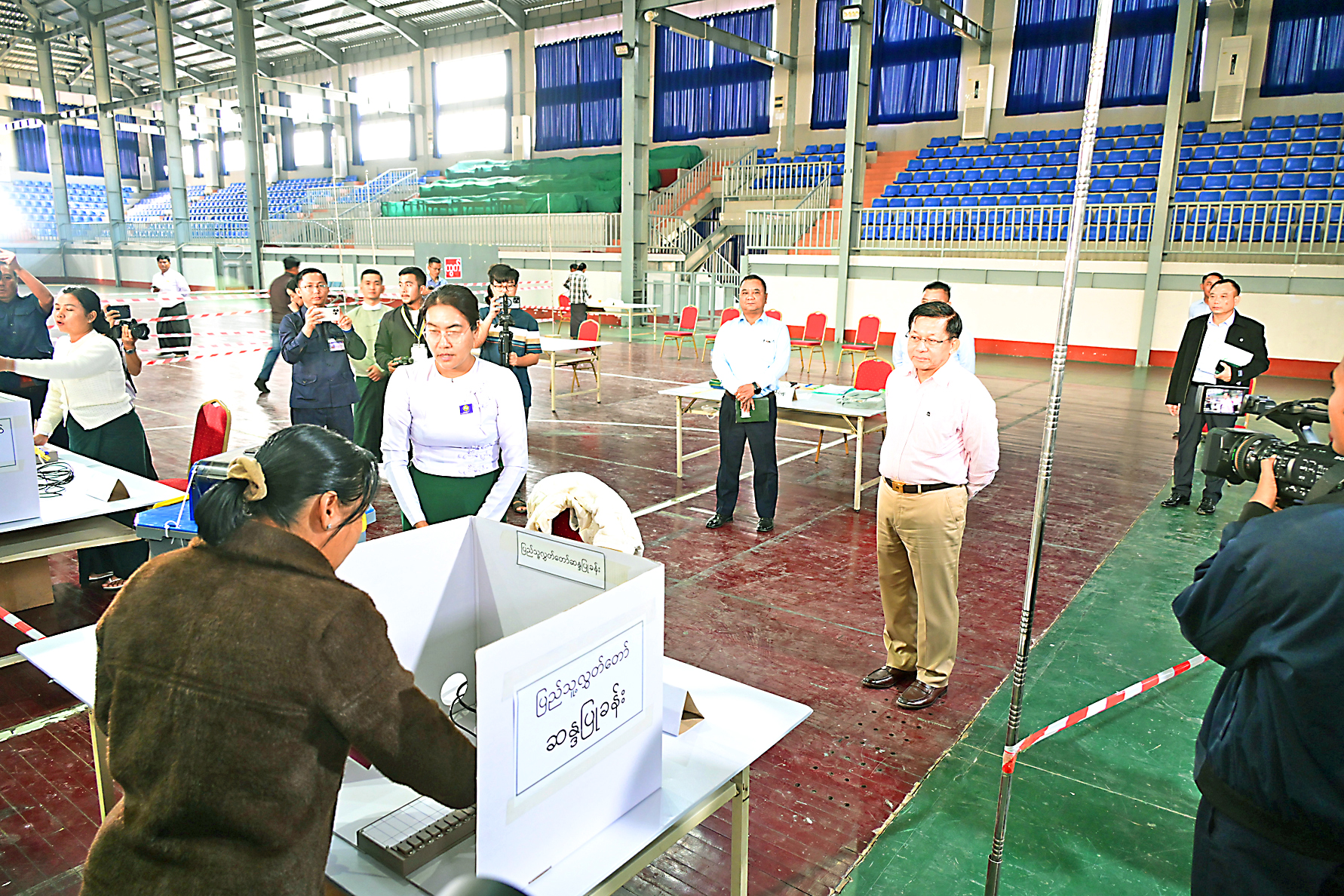
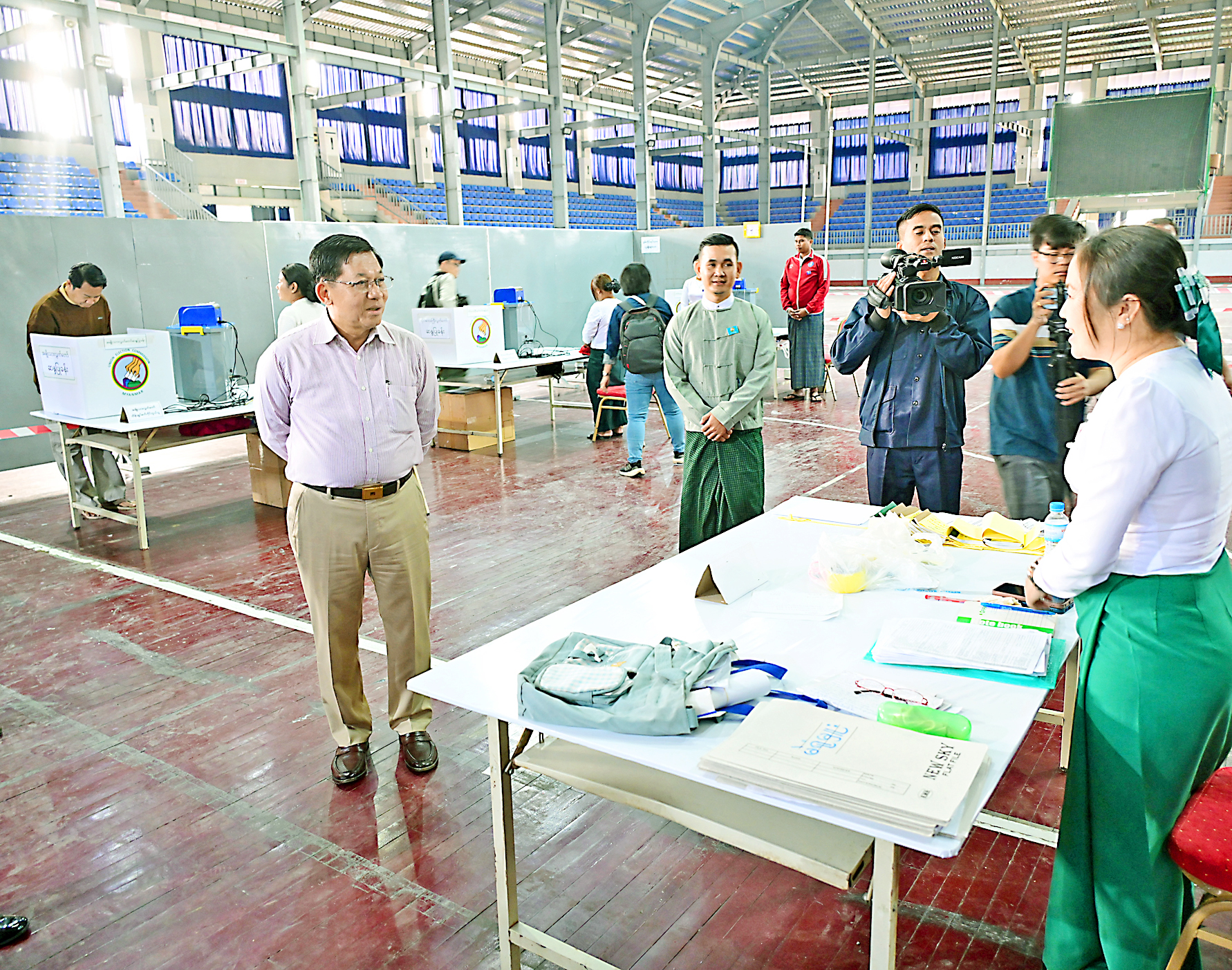
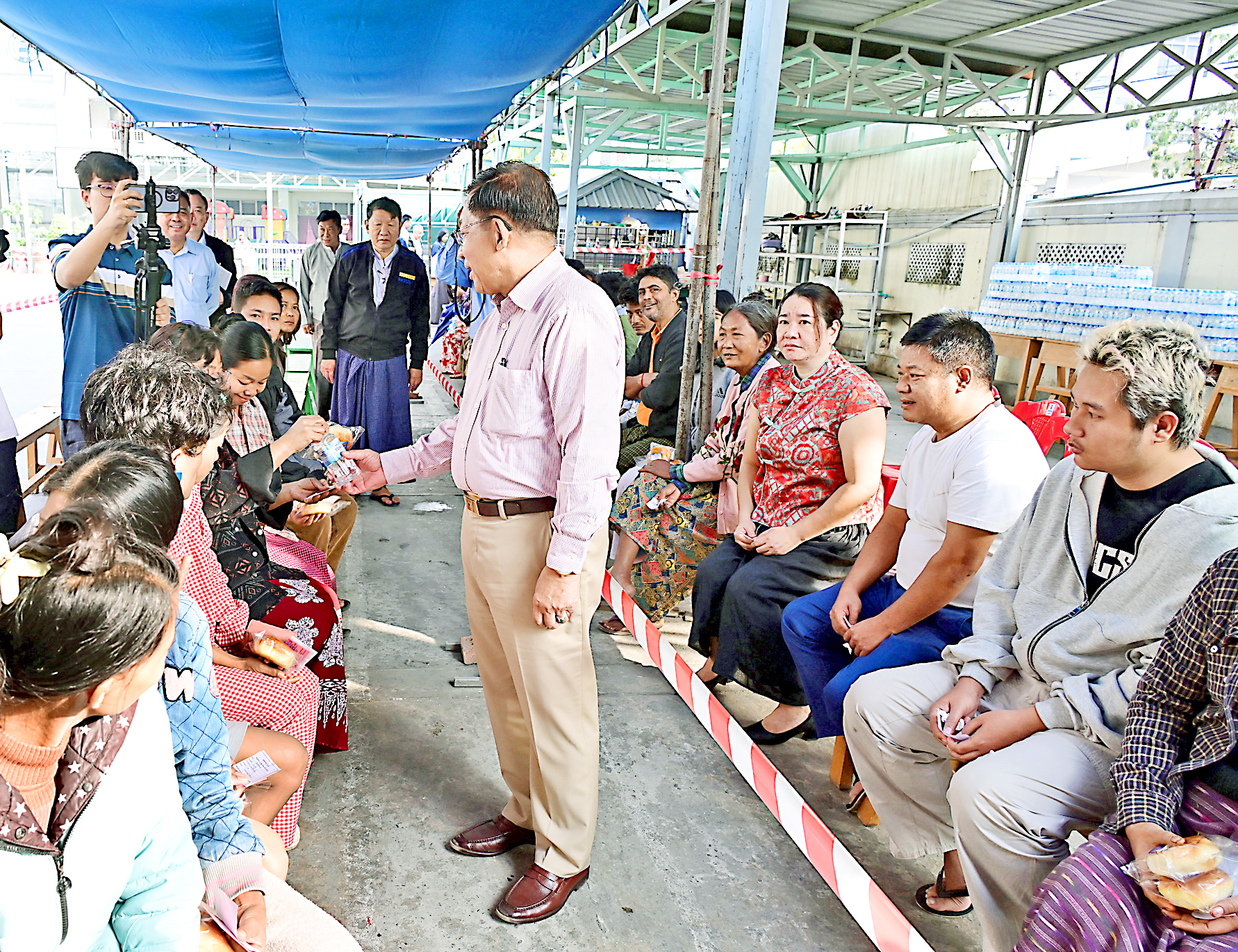
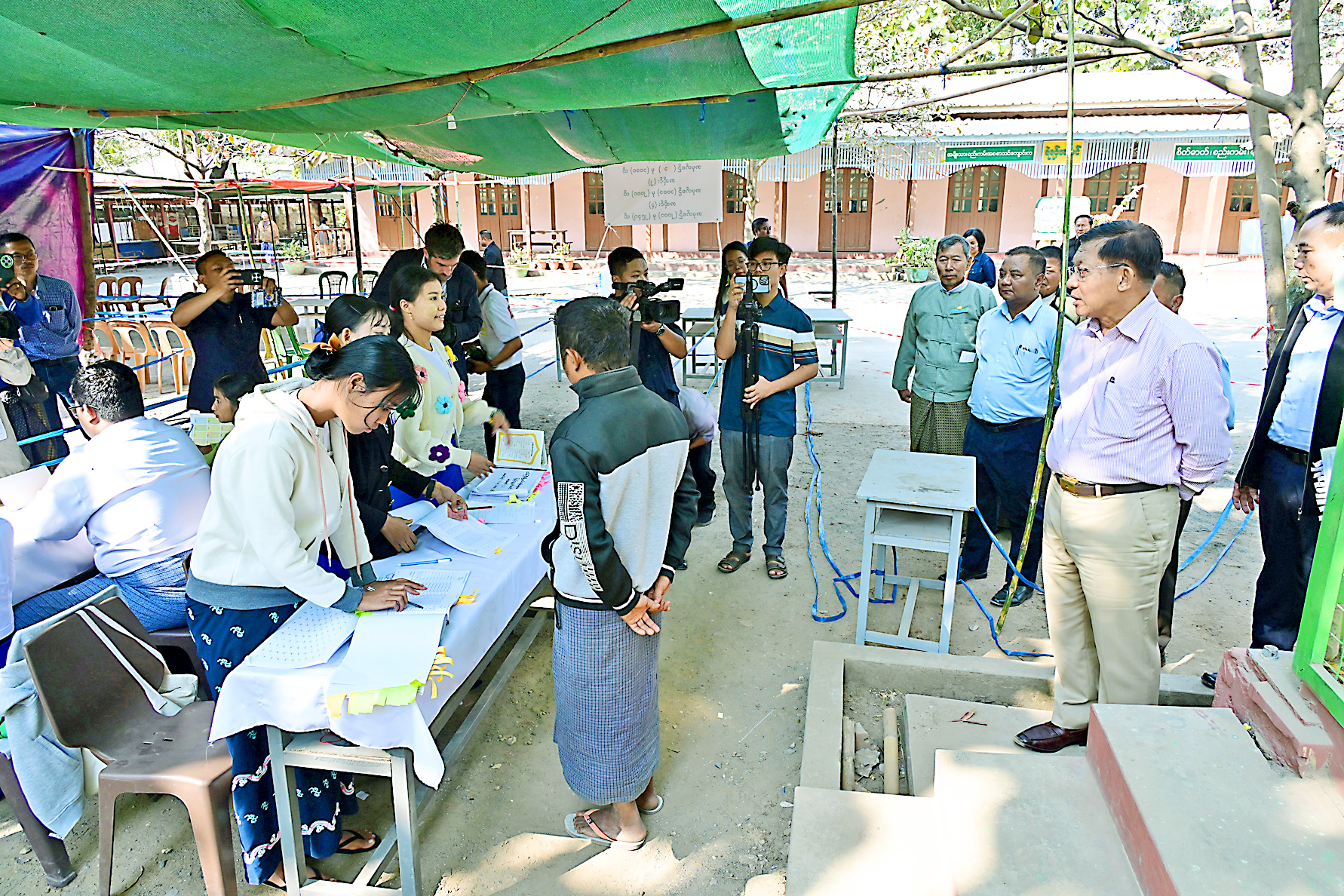
Acting President of the Re-public of the Union of Myanmar, Chairman of State Security and Peace Commission Senior General Min Aung Hlaing, accompanied by SSPC Secretary General Ye Win Oo and members of the entourage, visited the polling stations in Mandalay Region and cordially conversed with the voters.
During the visit, the Senior General observed the polling station officials checking the voter lists with computers at the booths in Patheingyi Township and the people ardently casting ballots there. He cordially met with voters and asked their views on MEVMs and voting process and on the polling station staff. He then warmly greeted the voters.
Voters on their part also expressed pleasure and pride for the Senior General’s visit to the polling stations and the encouragement he gave to them, and extended warm and cordial greetings back to the Senior General and party. They also cordially described their experiences in casting votes at the elections. Regarding their experiences and sentiment toward voting, they declared that they came there and cast votes of their own accord. They said that thanks to the MEVMs the voting process had become more convenient and swifter and the screen correctly showed the person they had voted for. Moreover, the occurrence of any kind of malpractices including vote stealing, vote rigging and election fraud were totally impossible, they expressed belief, adding that the whole voting process was user friendly.
While visiting the polling stations and encouraging the voters, the Senior General also answered the questions raised by the internal and external media gathering news there. The full text of the interview is as follows:
Q: Today is the last day of the election, so what are your expectations for the future of Myanmar?
A: Myanmar has already set
an aim of adopting a multi-party democratic system chosen by the people. We will follow this path (to multi-party democracy) as it is the choice of the people. It is not chosen by us, but by the people. We are a part of the people, and we are in favour of this path. So, it is clear that the country will proceed with a multi-party democratic system. It is also our future path.
Q: Some say that the USDP that supports the Tatmadaw will win (the election). Justifying that, some UN experts are advocating against acknowledging the election. Your comment on this matter, please.
A: The ones who are casting votes are the people of Myanmar, and not the foreigners. In fact, voters are the people living in Myanmar. They can vote whoever they favour. Voters come and cast ballots, because candidates include the ones they support. If there is no one to support, they will not go to the polls. There are two reasons behind the failure to cast votes. One reason is that there is no candidate they are in favour of and the other is safety. Because of the safety reason, some will find it hard to reach the polling station. Normally, people go to the polls because there is a candidate in their favour. There is the USDP, as you have just mentioned, and other parties such as PPP and Kya Byu (White tiger). The election involves multiple parties. In this regard, we had issued the voter lists. They voted freely, didn’t they? External recognition (of the election) is not in our interest. What we recognize is the votes cast by our people, and it is our goal.
Q: Are you going to take part in the succeeding government?
A: I can’t say anything about it yet. There will be the Hluttaw that also has its election methods.
Q: It is the final day, so what’s your message for the new government?
A: It should work for the good of the country. Whatever government comes, the important thing is the betterment of the country. a government has the duty to serve the nation’s interest, develop the country, ensure national peace and tranquility, and enable the country to stand shoulder to shoulder with the global counterparts. We all must try to achieve this. People’s involvement is also needed. The government’s leadership alone is not adequate for the matter. The government must have the plan, but public participation is a must. The government must organize the people as their involvement is a must. Although we are demanding democracy, it cannot be possible without the people. Their involvement is required as it is vital.
Q: There were a lot of difficulties, and it is the final day. So, what’s your message for the international community and the Myanmar people?
A: People should strive for the country’s betterment. They should have a broader view, and that is what I wish to say. Myanmar’s true condition should be known internationally. Nearly all the foreigners who are visiting Myanmar are aware of the huge difference between the hearsay and what they have heard with their own ears and seen with their own eyes. What I mean is the country is facing the consequences of rumors and acts of some media. But we also have many opportunities and if we can use them well the nation will develop.
Q: Can there be a government that is like the U Thein Sein-led administration in 2010? The USDP government assumed the duties in 2010 and won a considerable amount of public favour. Can the government that will be formed in 2025 expect a similar situation?
A: It depends on the condition and environment in which the winning party can render cooperation. Right? The administration led by President U Thein Sein actually did what they could. But there was opposition. If the opposition followed the way towards national progress, the situation would be different. But if the opposition was in the negative trend, difficulties would increase for any government.
Q: Challenges will not be the same. The landscape then was quite good. But the present landscape is rather chaotic. Might it be more difficult to control a situation like this?
A: (The landscape) is chaotic as it lacks peace and stability. It may be true, but there should be a broader view. The country should have a broader view, as I have previously mentioned.